Mini Mandala Review: Perfect for Small Business Patches
As an embroidery designer who has spent years digitizing and testing files for commercial use, I approach every new machine embroidery design with a critical eye. It is not just about whether the pattern looks pretty on a screen; it is about how it performs under the needle when producing hundreds of units for a client. Recently, I evaluated the Mini Mandala – Simple Embroidery Design specifically for its potential in small business merchandise and branded patch applications. My goal was to determine if this file could serve as a reliable asset for boutiques, cafes, and handmade brands looking to elevate their brand identity.
First Impressions: A Clean and Professional Aesthetic
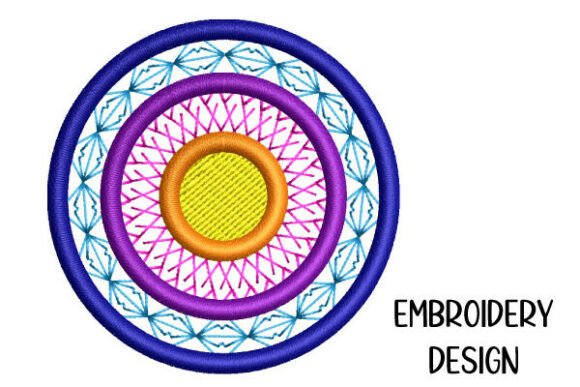
Upon loading the digital embroidery file, the first thing that stands out is the intentionality behind the structure. The description notes a "clean, simple structure," and this translates immediately into a visual language that feels modern yet timeless. Unlike complex mandalas that can become muddy when scaled down, this design maintains clarity. It strikes a balance between being decorative and functional. The aesthetic is friendly and approachable, making it suitable for a wide range of industries from florists to pet brands, without feeling overly rustic or too corporate. For a small business owner, this versatility is crucial because it allows the logo or accent to adapt to different contexts without losing its core personality.
Real-World Application for Commercial Embroidery
The true test of any design is its application in real-world scenarios. I simulated several use cases for the Mini Mandala – Simple Embroidery Design to see where it shines. The most obvious and effective use case is the embroidered patch. Because the design fits within a 10x10cm hoop, it is perfectly sized for iron-on or sew-on patches that can be attached to denim jackets, tote bags, or aprons. The simplicity of the lines ensures that even at smaller dimensions, the details do not collapse, which is a common failure point for intricate mandalas.
Beyond patches, this design excels as a chest logo accent on staff uniforms. Imagine a local bakery where baristas wear high-quality aprons; placing this mandala on the upper chest adds a touch of artisanal charm that reinforces the idea of a handmade product. Similarly, for a boutique clothing store, this could serve as a subtle sleeve detail on work shirts or a branded mark on the hem of a tote bag. The design's ability to function as a standalone graphic or a supporting element makes it a valuable addition to any library of design assets. It works exceptionally well for customer gifts, such as embroidered handkerchiefs or napkins, adding perceived value to the finished product with minimal production time.
Technical Considerations and Fabric Compatibility
While the design is robust, there are specific areas where caution is required. When working with cap embroidery, the curved surface of the front panel can distort circular designs if the digitizing is not tight. I recommend running a test stitch-out on a spare cap to ensure the columns of the mandala do not gap on the curve. Additionally, for very small patch sizes, one must be mindful of stitch density. If the density is too high for the chosen fabric, the material may pucker, ruining the professional look.
Fabric texture also plays a significant role. On smooth, tightly woven cotton or poly-blends, the design will appear crisp. However, on textured fabrics like heavy canvas tote bags or rough linen aprons, the fine details might get lost. In these cases, adjusting the pull compensation or choosing thicker thread colors with high contrast against the fabric is essential. For dark uniforms, ensure you have a solid underlay strategy to prevent the background fabric from showing through the open spaces of the mandala.
Impact on Brand Identity and Customer Trust
In the competitive landscape of small business merch, consistency is key to building trust. Using a cohesive visual element like the Mini Mandala – Simple Embroidery Design across various touchpoints—from packaging accents to employee apparel—creates a unified brand experience. Customers subconsciously associate high-quality embroidery with professionalism and attention to detail. When a client receives a tote bag with a cleanly stitched, well-centered mandala, it elevates their perception of the brand's quality. This design helps bridge the gap between a hobbyist vibe and a premium commercial presence, enhancing buyer engagement and encouraging social media sharing of the custom apparel or accessories.
Practical Notes for the Production Designer
Before committing to a large production run, I always follow a strict checklist to mitigate risks. Here are my professional recommendations for using this specific file:
- Test in Black and White First: Stitch the design using only black thread on white fabric (and vice versa) to evaluate the structural integrity without the distraction of color.
- Verify Hoop Size: Although designed for a 10x10cm hoop, always confirm your machine's actual field limits to avoid hitting the hoop edges during rotation.
- Check Stabilizer Requirements: For stretchy fabrics like t-shirts or caps, use a cut-away stabilizer to maintain shape over time. For woven aprons, a tear-away may suffice.
- Create a Printable Mockup: Before stitching, generate a printable mockup to show clients how the design will look on their specific garments. This manages expectations and secures approval.
- Review Thread Contrast: Ensure your chosen thread colors provide enough contrast against the garment color, especially for low-light environments like cafes.
- Confirm Licensing: Always verify the commercial licensing terms of the embroidery file before selling items featuring this design to ensure compliance.
Ultimately, the Mini Mandala – Simple Embroidery Design proves itself to be a versatile and reliable tool for the modern embroidery entrepreneur. It respects the limitations of the medium while offering enough stylistic flair to make a statement. Whether you are outfitting a team, creating limited-edition merchandise for an Etsy shop, or adding a signature touch to product packaging, this design holds up under scrutiny. Just remember to respect the technical constraints of your materials and machinery, and this mandala will serve as a sturdy pillar in your branding strategy.